

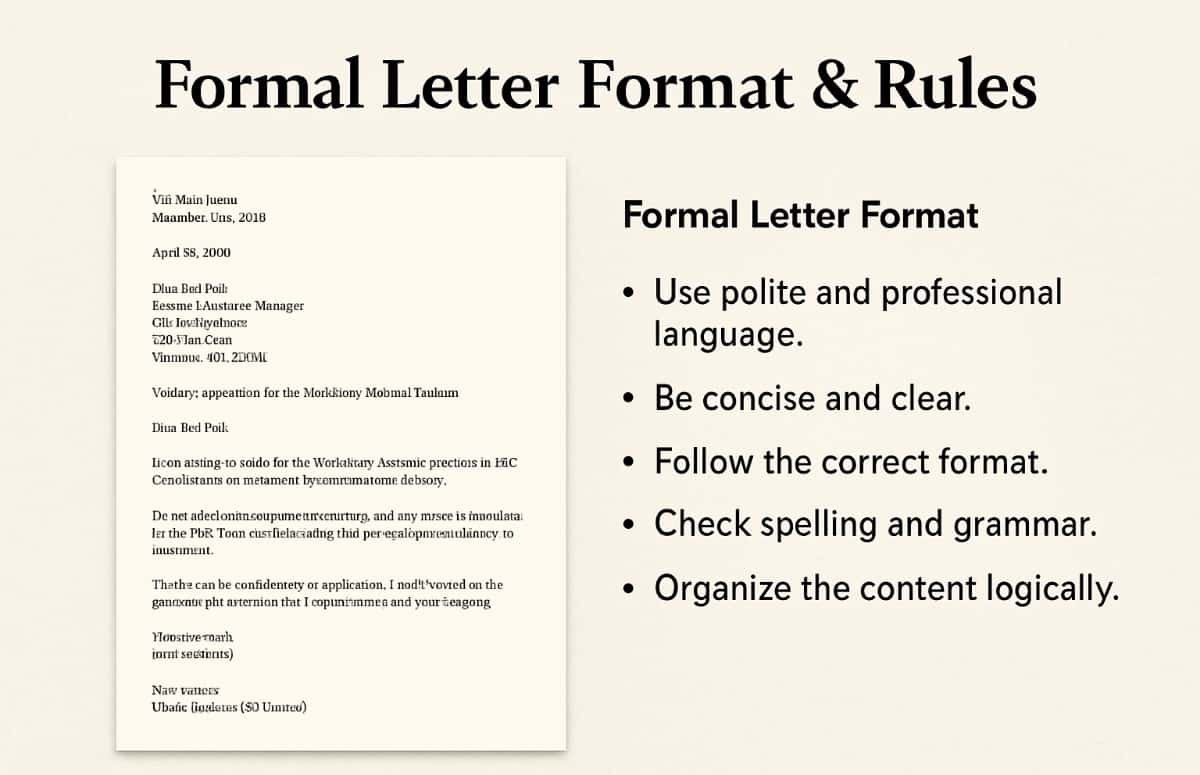
Formal Letter Format is one of those essential skills that everyone needs, no matter their age, profession, or field of study. Whether you’re a student writing to your principal, a job seeker reaching out to an employer, or a professional communicating with a client, knowing how to structure a formal letter properly makes a world of difference.
In today’s digital era, where emails often replace handwritten letters, the art of writing a proper formal letter still holds tremendous value. A well-structured letter reflects respect, professionalism, and attention to detail—qualities that can leave a lasting impression.
Let’s explore everything you need to know about crafting an effective Formal Letter Format that suits both academic and professional purposes.
Why Learning Formal Letter Format Is Important
The ability to write a proper formal letter shows that you understand professional etiquette and can communicate with clarity. Unlike casual messages or texts, formal letters have a defined structure that expresses ideas in a respectful, organized, and logical manner.
For students, this might mean writing to school authorities for permission, scholarships, or feedback. For professionals, it could mean sending proposals, complaints, or partnership requests. The tone, format, and structure matter equally in both scenarios.
A well-written letter demonstrates maturity and professionalism. It can influence decisions, strengthen your credibility, and even open doors to new opportunities. Mastering the Formal Letter Format ensures your message is received seriously and respectfully.
Basic Structure of a Formal Letter
The beauty of the Formal Letter Format lies in its simplicity. It follows a universally accepted structure that makes your communication easy to understand and visually clean. Every formal letter should include the following parts in order:
1. Sender’s Address
The letter begins with your address, aligned to the left-hand side of the page. This helps the recipient know where to send a reply. Avoid abbreviations in addresses for clarity.
Example:
23 Green Street
London, UK
2. Date
Leave a line after the sender’s address and write the date. Use a proper format such as “November 4, 2025.” Avoid writing it as “4/11/25,” which might cause confusion internationally.
3. Receiver’s Address
Next, mention the recipient’s address, including the name, designation, company, and location. Ensure accuracy to avoid miscommunication.
Example:
The Manager
ABC Enterprises
45 Blue Avenue
Manchester, UK
4. Subject Line
The subject line tells the reader the purpose of your letter in one concise sentence. Keep it brief and relevant—for instance, “Application for Internship Opportunity” or “Request for Certificate.”
5. Salutation
This sets the tone of your letter. Use polite greetings like “Dear Sir/Madam,” or “Dear Mr. Smith.” Avoid informal greetings such as “Hi” or “Hey.”
6. Body of the Letter
The body is the heart of your letter. It usually consists of three paragraphs:
The introduction explains who you are and why you are writing.
The main paragraph details your message, request, or explanation.
The closing paragraph politely summarizes your point and expresses gratitude.
7. Complimentary Close
End the letter respectfully with phrases like “Yours sincerely,” (if you know the recipient’s name) or “Yours faithfully,” (if you don’t).
8. Signature
Include your handwritten or typed signature followed by your full name and designation if applicable.
Tone and Language in Formal Letters
One of the defining features of a formal letter is its tone. The language should always be respectful, concise, and direct. Avoid slang, abbreviations, and emotional expressions. For instance, instead of writing “I really need this,” you might say, “I would appreciate your consideration of my request.”
For students, maintaining a courteous tone while writing to teachers or principals is essential. For professionals, it’s about maintaining brand tone and reflecting integrity.
Remember, clarity is key. The reader should easily grasp the purpose of your letter within a few seconds.
Formal Letter Format for Students
For students, formal letters are often used in academic communication. Whether you’re writing to your school principal to request a leave, apply for a certificate, or express gratitude, structure and tone make a huge difference.
Example:
Sender’s Address:
14 Maple Road
London, UK
Date:
November 4, 2025
Receiver’s Address:
The Principal
Green Valley High School
London, UK
Subject: Request for Two Days Leave
Salutation: Dear Sir/Madam,
Body:
I am a student of Class 10B, and I am writing to request leave for two days (November 6–7, 2025) due to a family event. I will ensure all missed assignments are completed promptly. I kindly request your approval.
Complimentary Close: Yours faithfully,
Signature: Emma Brown
This example follows the standard Formal Letter Format, ensuring clarity, respect, and professionalism.
Formal Letter Format for Professionals
In a professional setting, formal letters are used for business correspondence, partnership proposals, or official communication. While the structure remains similar, the tone becomes more assertive and corporate.
Example:
Sender’s Address:
25 Oxford Street
London, UK
Date:
November 4, 2025
Receiver’s Address:
The Human Resource Manager
TechNova Solutions
London, UK
Subject: Application for Marketing Executive Position
Salutation: Dear Mr. Johnson,
Body:
I am writing to apply for the position of Marketing Executive as advertised on your company website. With over three years of experience in digital marketing, I am confident in my ability to contribute effectively to your team. My expertise in campaign management and SEO strategy aligns with your organization’s goals.
I would be grateful for the opportunity to discuss how my background can benefit TechNova Solutions. Thank you for your time and consideration.
Complimentary Close: Yours sincerely,
Signature: Daniel Harris
A professional letter like this shows confidence, organization, and awareness of communication etiquette.
Common Mistakes to Avoid in Formal Letters
Even a well-intentioned letter can lose impact due to small errors. Here are some mistakes to watch out for:
Writing without a clear purpose—always know why you’re writing.
Using an informal tone—avoid phrases like “Hey” or “Thanks a lot.”
Skipping essential details—always include addresses, dates, and subject lines.
Not proofreading—typos and grammar errors can harm credibility.
The more you practice, the more natural the Formal Letter Format becomes. Proofreading and reading aloud can help identify awkward phrases or errors before sending your letter.
How Formal Letters Differ from Informal Letters
Formal letters are structured, impersonal, and professional, while informal letters are conversational and emotional. A formal letter maintains distance and respect, while an informal letter focuses on warmth and familiarity.
Understanding this difference helps you adapt your writing style according to context. For instance, while you might end an informal letter with “Take care,” a formal one should end with “Yours sincerely.”
Mastering Formal Communication in the Digital Age
While traditional letter writing has declined with the rise of emails, the Formal Letter Format continues to influence how professionals communicate online. A well-written email that mirrors formal letter structure commands respect and clarity.
In workplaces and universities, professionalism is reflected not only in what you say but how you say it. Whether it’s an email to a professor, a cover letter for a job, or a client proposal, using the right tone and structure makes your message more effective.
Learning to write a proper formal letter is like learning a timeless art. It builds confidence, fosters respect, and strengthens communication in every aspect of life—academic or professional.
Read also:
interjection
enmeshment meaning
lumon meaning
words that start with x