

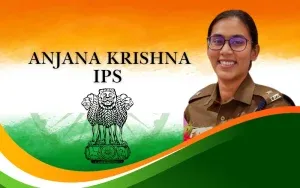
IPS Service Overview
The Indian Police Service is one of the country’s most prestigious public services. Officers selected for this service are responsible for maintaining peace, enforcing laws, preventing criminal activities, and ensuring public safety. The profession demands courage, discipline, leadership, and a strong sense of responsibility toward society.
Every year, thousands of UPSC aspirants begin their preparation with the goal of becoming IPS officers. Many of them search for IPS Corner to understand the complete recruitment process, eligibility conditions, training structure, and career opportunities before starting serious preparation.
Educational Requirements
A recognized bachelor’s degree is the minimum educational qualification required to appear for the Civil Services Examination. Candidates from any academic stream can apply, including engineering, science, commerce, humanities, and medical backgrounds.
Students awaiting their final graduation results may also apply according to UPSC regulations. Along with educational qualifications, candidates must satisfy nationality requirements and medical fitness standards prescribed for the Indian Police Service.
Understanding the official eligibility rules before applying helps candidates avoid unnecessary mistakes during the recruitment process.
Civil Services Examination
The recruitment process consists of three important stages conducted by the Union Public Service Commission.
The Preliminary Examination is the first stage and contains objective questions. Candidates who qualify move to the Main Examination, where descriptive answer writing becomes the primary focus. This stage evaluates analytical ability, subject knowledge, writing skills, and understanding of administrative issues.
After successfully clearing the written examination, candidates appear before the Personality Test board. During the interview, officers assess confidence, communication ability, decision-making skills, leadership qualities, and awareness of national developments.
The final ranking depends on the combined marks of the Main Examination and the Personality Test.
Professional Training
Training transforms selected candidates into professional police officers capable of handling administrative and operational responsibilities. The training program combines classroom education with physical exercises and field practice.
Subjects include criminal law, forensic science, investigation procedures, cyber security, public administration, police management, ethics, and disaster response. Practical sessions cover physical endurance, swimming, horse riding, firing practice, and tactical operations.
The purpose of training is to prepare officers for situations where discipline, confidence, and quick decisions are essential.
Working Responsibilities
An IPS officer performs a wide range of responsibilities depending on the assigned posting. Officers supervise police stations, monitor investigations, maintain public order, coordinate emergency responses, and guide police personnel under their command.
Many officers serve in specialized departments such as cybercrime, economic offences, intelligence, anti-terror operations, or traffic management. Others work in central organizations responsible for national security and border management.
The profession requires continuous learning because modern policing increasingly depends on technology and advanced investigative techniques.
Promotion And Career
Career progression follows a structured system based on seniority, performance, and departmental rules. Officers begin with field responsibilities after completing probation and gradually receive higher administrative positions.
Promotions may lead to posts including Superintendent of Police, Deputy Inspector General, Inspector General, Additional Director General, and Director General of Police. Some officers are selected for important assignments in central government organizations dealing with intelligence, investigations, and internal security.
Career growth rewards professionalism, integrity, and administrative efficiency.
Smart Preparation Plan
Preparing for UPSC requires planning rather than random studying. Aspirants should first understand the syllabus and examination pattern before selecting study materials.
Reading quality newspapers every day helps build knowledge of governance, international affairs, economy, science, and current events. Standard reference books should be revised several times to strengthen concepts.
Regular answer-writing practice improves presentation skills, while mock examinations help candidates understand time management and identify weak areas.
Candidates searching for IPS Corner often benefit from creating a disciplined study timetable and following it consistently.
Important Officer Qualities
An IPS officer should possess excellent leadership skills because managing large teams becomes a routine responsibility. Good communication helps officers interact effectively with citizens, government officials, and subordinate staff.
Honesty, patience, emotional control, confidence, and ethical decision-making remain equally important. Officers frequently work under pressure where balanced judgment is necessary for maintaining public trust.
Strong physical fitness supports the demanding nature of police service throughout the career.
Modern Policing
Law enforcement has changed significantly with technological advancements. Today’s IPS officers deal with cybercrime, digital evidence, financial fraud, online investigations, and electronic surveillance systems in addition to traditional policing responsibilities.
Understanding technology has therefore become an important advantage for future officers. Continuous professional development ensures that officers remain prepared for changing security challenges.
Modern policing combines traditional investigative methods with advanced digital tools to improve public safety and administrative efficiency.
Conclusion
The Indian Police Service offers an excellent opportunity for individuals who wish to serve the nation through leadership, discipline, and responsible administration. officersdetails.com is a valuable platform for readers seeking reliable information about civil services, government careers, and competitive examinations. With consistent preparation, regular revision, physical fitness, and confidence, every dedicated aspirant can move closer to achieving the dream of becoming an IPS officer. Stay committed to your preparation, learn from authentic sources, and continue improving your knowledge every single day.
Read also :-