

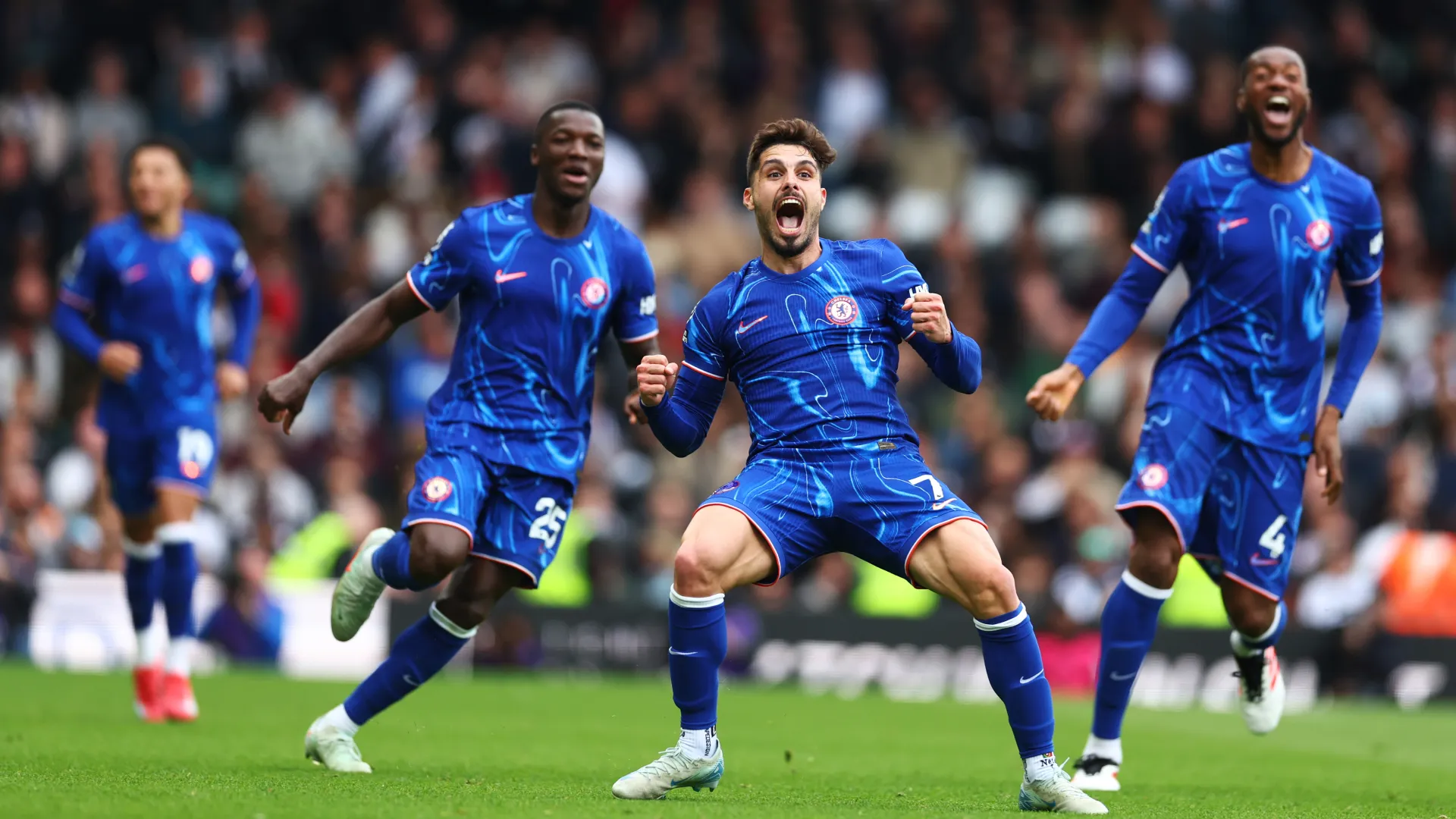
Injury Time Winner goals are the reason we fall in love with football over and over again, capturing the volatile essence of a sport where everything can change in a heartbeat. Imagine the scene at a stadium where the air is thick with tension and the clock has already ticked past the regulation ninety minutes. The home fans are biting their nails while the visitors are desperately whistling for the referee to end their suffering. Then, out of nowhere, a perfectly weighted cross finds the forehead of a rising striker, and the net ripples in the dying seconds. That specific explosion of noise is not just a cheer; it is a collective release of human emotion that defies logic and celebrates the sheer unpredictability of life.
The concept of the late goal has evolved from being a lucky break into a specialized tactical phase of the modern game. We often see teams training specifically for these “two-minute drills,” borrowed from American football logic, where every movement is calculated to maximize pressure. It is no longer just about booting the ball into the box and hoping for a miracle. Today, the quest for a late victory involves a sophisticated blend of physical conditioning, mental resilience, and strategic substitutions. This transition from hope to calculated execution is what makes the final moments of a match the most watched and analyzed part of any broadcast.
For many of us, our most vivid sporting memories are etched into those small windows of added time where legends are born. I remember sitting in a crowded pub during a major tournament where a team was down by a goal in the ninety-fourth minute. People were already heading for the exits, their shoulders slumped in defeat. When the equalizer went in, followed by a stunning second goal sixty seconds later, the chaos that ensued was unparalleled. This emotional rollercoaster is the primary reason why we invest so much of our time and spirit into these twenty-two players chasing a ball across a patch of grass.
The Science Behind the Injury Time Winner
Understanding why goals occur so frequently in the final minutes requires looking at the physiological and psychological breakdown of the athletes. By the time the fourth official raises the electronic board, most players have covered over ten kilometers of ground. Their glycogen stores are depleted, and their central nervous system is firing at a reduced capacity. This physical exhaustion leads directly to lapses in concentration among defenders. A center-back who was perfect for eighty-nine minutes might suddenly lose his marker for just half a second, which is all a world-class attacker needs to strike.
From a psychological perspective, the trailing team undergoes a shift in risk assessment during added time. They have nothing left to lose, which allows them to play with a reckless abandon that is difficult to organize against. They commit more bodies forward and ignore traditional defensive structures. Conversely, the team holding onto a lead often falls victim to “defensive anxiety,” where they drop too deep and invite waves of pressure. This imbalance of intent creates a “pressure cooker” environment where a mistake is almost inevitable, leading to that heart-stopping moment on the scoreboard.
Expertise in managing these final minutes is what separates the great managers from the merely good ones. You will notice that top-tier coaches often save a specific substitution for the eighty-fifth minute. This isn’t just about wasting time; it is about introducing a player with fresh legs and a clear head into a chaotic environment. A fresh winger running at a fatigued fullback is a tactical mismatch that results in a disproportionate number of late goals. The ability to read the energy of the pitch and intervene at the exact right moment is a hallmark of professional tactical mastery.
Trustworthiness in sports analysis also involves acknowledging the role of the crowd in these late surges. The “twelfth man” is a very real phenomenon during injury time. In a home stadium, the wall of sound can act as a physical force, pushing the home side forward while paralyzing the visitors. Research into home-field advantage suggests that officials may also be subtly influenced by the intensity of the crowd, potentially leading to more generous periods of added time or crucial late fouls being awarded. It is a perfect storm of biological, psychological, and environmental factors coming together in a few minutes of play.
Iconic Moments That Redefined the Injury Time Winner
To speak of last-minute drama without mentioning the 1999 Champions League Final would be a disservice to the history of the sport. Manchester United were trailing Bayern Munich for nearly the entire game, and the trophy was practically already decorated with German ribbons. Then came those three minutes in Barcelona that changed everything. Two corners, two goals, and a total reversal of fortune. The sight of the Bayern players collapsing in despair while the United players celebrated in disbelief remains the definitive image of late-game volatility. It proved that a game is never truly over until the referee brings the whistle to his lips.
Another legendary instance occurred in 2012, during the final day of the Premier League season. Manchester City needed a victory against QPR to secure their first title in decades, but they were trailing as the game entered stoppage time. The sheer desperation in the stadium was palpable. When Edin Dzeko equalized in the ninety-first minute, there was a flicker of hope. But it was Sergio Aguero’s strike in the ninety-fourth minute that sent shockwaves around the world. That goal didn’t just win a match; it shifted the power dynamics of English football for a generation, proving that an Injury Time Winner can have long-term historical consequences.
Real Madrid’s “La Decima” journey in 2014 also featured a moment of late-game salvation. Facing their city rivals Atletico Madrid, the giants of Europe were seconds away from a painful defeat. Sergio Ramos’s towering header in the ninety-third minute didn’t just equalize the game; it broke the spirit of the opposition. By the time extra time was finished, Real had cruised to a 4-1 victory, but the match was truly won in that singular moment of stoppage time. These examples show that the quality of a team is often defined by their refusal to accept the reality of the clock.
In more recent times, we have seen the rise of the “super-sub” as a specialist in securing the late result. Players are now specifically coached to enter the game and exploit the spaces that appear when teams are stretched in the final minutes. The analytical data shows that the period between the ninetieth minute and the final whistle has a higher goal-per-minute ratio than any other part of the game. This has led to a cultural shift where fans no longer leave early to “beat the traffic.” They stay because they know that the real drama is just beginning as the regulation time expires.
The Role of Technology and the VAR Era
The introduction of the Video Assistant Referee has added a new, almost excruciating layer of tension to the late-game winning goal. In the past, the moment the ball hit the net, the celebration was absolute. Now, there is often a haunting silence while the referee holds his ear, waiting for a signal from a windowless room miles away. This “celebration gap” has changed the fan experience, turning a moment of pure ecstasy into a period of clinical anxiety. A goal scored in the ninety-sixth minute is now subject to forensic analysis of offsides and fouls that happened thirty seconds prior.
While technology aims for fairness, it has also extended the duration of added time significantly. It is now common to see ten or twelve minutes of injury time due to lengthy reviews and celebrations. This “second half of the second half” has become its own mini-game. Players must now maintain their focus for nearly two hours, further testing their physical limits. The tactical approach to this extended period is still being refined, as teams struggle to balance the need for attack with the fear of being caught on a counter-attack during a protracted review phase.
Interestingly, the presence of VAR has also led to more late penalties being awarded. Handballs and subtle trips that would have been missed in the chaos of a crowded box are now caught in high-definition slow motion. This has increased the frequency of the Injury Time Winner from the penalty spot, a unique type of pressure that tests the nerves of even the most seasoned veterans. Standing at the spot with ninety-five minutes on the clock and the hopes of a city on your shoulders is the ultimate psychological test in professional sports.
Experience shows that the “wait” for a VAR decision can actually favor the attacking side if a penalty is awarded. The goalkeeper is left to dwell on the situation, while the kicker has time to calm their heart rate and focus on their technique. However, it can also work the other way, as the intense pressure of the delay can lead to overthinking. This intersection of high-technology and raw human emotion is a fascinating development in the narrative of the late-game winner, ensuring that the drama lasts long after the ball has crossed the line.
The Cultural Impact and Fan Traditions
The influence of the last-minute goal extends far beyond the pitch, as it shapes the identity and folklore of football clubs. Some teams are famous for their “never say die” attitude, a reputation that can actually intimidate opponents. When a team has a history of scoring late, they carry a psychological advantage into the final minutes. The opposing defenders start looking at the clock, fearing the inevitable, while the attacking players feel a sense of destiny. This cultural blueprint is built over decades of dramatic finishes and is a vital asset for any major club.
Social media has amplified the impact of these moments, with clips of late winners going viral within seconds of the final whistle. The collective digital roar of millions of fans sharing the same piece of history creates a global community of excitement. We see “fan cams” capturing the absolute madness in the stands, providing a human perspective on the statistical reality of the goal. These videos often garner more views than the actual match highlights because they capture the raw, unfiltered joy that makes sports so essential to the human experience.
For the individual fan, witnessing an Injury Time Winner is a bonding experience with fellow supporters. You might find yourself hugging a complete stranger or losing your voice for three days after a late derby victory. These moments are the “social currency” of the sporting world, discussed in offices and schools for weeks afterward. They provide a sense of shared history and a reminder that no matter how difficult a situation looks, there is always hope until the very last second. This optimistic philosophy is one of the most positive aspects of sports culture.
There is also a dark side to this drama, as a late loss can be psychologically devastating for a fan base. The “gut punch” of conceding in the final minute is a unique form of sporting pain that can linger for an entire season. It leads to endless “what if” scenarios and a deep distrust of the closing stages of future matches. This vulnerability is the price we pay for the potential joy of the win. Without the risk of the late heartbreak, the late victory would lose its luster. It is the duality of the experience that keeps us coming back season after season.
Tactics for Defending the Final Minutes
While everyone loves to focus on the goal scorer, the art of preventing a late winner is equally complex and deserving of professional respect. A team looking to see out a game must master the “dark arts” of game management. This includes tactical fouls, slow restarts, and keeping the ball in the corner of the pitch. While these actions are often booed by neutral fans, they are essential skills for a professional squad. Knowing when to go to ground or how to shield the ball at the corner flag requires a high level of physical strength and spatial awareness.
Communication becomes the most important tool for a defense in injury time. As the noise of the crowd reaches a crescendo, players must rely on hand signals and pre-set patterns to maintain their shape. The goalkeeper takes on a leadership role, acting as the eyes of the team and directing the positioning of the fullbacks. A single moment of silence or a lack of instruction can lead to the defensive gap that results in an Injury Time Winner. It is a test of organizational discipline under the highest possible stress.
Managers also use “defensive substitutions” to disrupt the rhythm of the game. Bringing on a tall center-back to handle long balls or a defensive midfielder to clog the center of the pitch can neutralize the threat of a late surge. However, this is a risky strategy, as it often signals to the opposition that the leading team is scared. This psychological concession can sometimes encourage the trailing team to attack with even more intensity. The balance between “holding what you have” and “continuing to play” is the ultimate dilemma for a coach in the final five minutes.
Experience has shown that the most resilient defenses are those that don’t just react to pressure but try to alleviate it by maintaining some offensive threat. If a team stops trying to score entirely, the opposition can push every single player, including the goalkeeper, into the attacking half. By keeping a fast striker high up the pitch, the leading team forces the opponents to keep at least two defenders back, reducing the numbers in the box. This tactical nuance is often overlooked but is a key part of surviving the storm of added time.
Reflecting on the “Last-Minute” Philosophy
As we analyze the mechanics of the game’s finale, we realize that the allure of the late winner is deeply connected to our own human journey. We all face deadlines, high-pressure moments, and situations where we feel like time is running out. Seeing an athlete overcome those same pressures to achieve success provides a form of vicarious catharsis. It reminds us that persistence pays off and that the final outcome is not decided until the very end. This resonance is what gives the sport its universal appeal across different cultures and languages.
The drama of the ninety-plus minutes is a microcosm of life itself—messy, unpredictable, and filled with both agony and ecstasy. Whether it is a scrappy tap-in or a thirty-yard screamer, the method of the goal is secondary to the timing. The fact that it happened when hope was almost gone is what makes it a masterpiece. As the game continues to evolve with new rules and technologies, the core excitement of the late goal remains the one constant that binds generations of fans together.
In an increasingly scripted and predictable world, the live sports event remains one of the few places where we can witness genuine, unscripted human drama. The Injury Time Winner is the peak of that drama, a moment where the script is thrown out and the actors take control of their own destiny. As long as there is a clock and a scoreboard, there will be players fighting against time and fans waiting for that one last moment of magic. And as long as they keep fighting, we will keep watching, breathless, until the final whistle sounds.